

Bieber fever
We could all do with a bit more authenticity

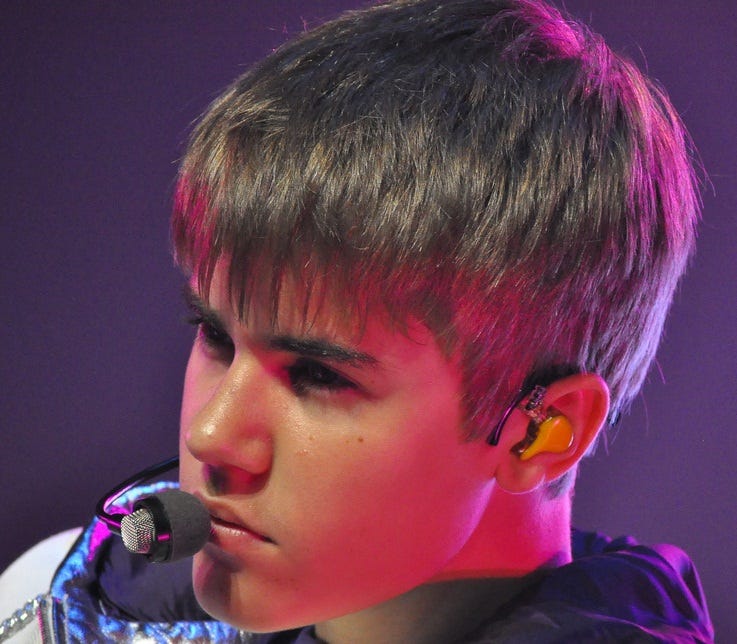
Coachella is about performance - and that goes for attendees just as much as the musicians themselves. Whether it’s influencers and brand collabs, outfits being dissected, or videos of laughably luxurious camping set-ups, it’s a festival of content as much as a gathering of live music. For creators it’s a business opportunity, loaded with Instagrammable moments. Speaking about the event, YouTube’s senior manager of artist partnerships Matt McLernon said: “There’s as many cameras pointed at the actual artists onstage as there are amongst the crowd.”
This year the festival was dubbed Bieberchella, owing to Justin Bieber’s much-anticipated headline slot. He took to the stage in a hoodie and sang tracks from Swag and Swag II before turning to his back catalogue to play hits including ‘Sorry’ and ‘Confident’, duetting with his teenage self. He brought out The Kid Laroi, Wizkid, Tems and Dijon - with Mk.gee joining him at the end for a rendition of ‘Daisies’. At one point he took to his laptop and searched in real-time for memes and old videos of himself, making fun of recent awkward paparazzi moments. “This is me walking into a glass door,” he said, playing an old clip of his swept-hair teen self clumsily trying to exit a hotel. “Goodness… this is a good one,” he said, typing ‘Justin Bieber falls through stage’ into the search bar.
Many people felt short-changed by the appearance. His performance was dubbed “unprofessional” and “lazy”. The Daily Mail called it “unrehearsed and sloppy”, while Entertainment Weekly’s review headline, hilariously, read: ‘Justin Bieber delivers sleepy Coachella performance, doomscrolls and watches YouTube videos mid-show’ - as though he’d just got bored and decided to click on things on his computer.
But Bieber’s performance felt like a genuine representation of himself, designed for fans to feel like they were hanging out with him. On recent Twitch streams, he’d been re-watching old clips of himself performing. At Coachella, some fans might have preferred choreography, CO2 cannons, and a cosplay of his past, but what he did was vulnerable, with little production maximalism to hide behind. When you’ve been performing for most of your life, been picked apart by tabloids and psychoanalysed constantly, perhaps all you want to do is subvert people’s expectations and be yourself on stage.
I wrote about musicians’ increasing push for authenticity in a piece for Dazed in August 2024: “Realness and relatability are everything in music at the moment. They’re in the ascent of Raye, per her narrative about being mistreated by her former label, of PinkPantheress, the bedroom producer whose first performances saw her handbag nonchalantly slung around her shoulder. It’s in the continuous industry plant debates, and the ‘my label forced me to make this promotional video’ TikToks. Presentations of just being some guy are everywhere: when Fred Again, Skrillex and Four Tet walked out on stage for their Coachella closing slot, they were swigging from beer bottles, with the latter clutching a tote bag full of what looked like his grocery shopping.”
Where this falls down is when the artifice collapses, and we the audience can sense the marketing gimmick or manufactured “realness” of it all. There was definitely a sense of that with this: I don’t know whether - on top of his reported $10 million fee - Bieber’s performance was financed by YouTube (the company was a major sponsor of the festival, and posted a feverish comment on his Instagram about the slot). I’ve also seen criticisms of the performance as being tailored for the livestream viewers at home, rather than the crowd - which shows, interestingly, how festivals are catering towards online reach as much as their attendees.

But Bieber has earned the right to pull a stunt like this. He was discovered on YouTube - under his kidrauhl username - by Scooter Braun, and raised in the public eye. His career has unfolded alongside the explosion of the creator economy, and the internet we now know is nothing like what it was when he debuted in 2009. Last year’s SWAG and SWAG II were both surprise releases, with minimalist roll-outs, and saw a new approach from the megastar - less polish, more indie R&B, a move away from the conventional rules of pop.
There are logistical reasons behind him performing what some labelled “laptop karaoke”: he can no longer sing in the higher register that hits like ‘Baby’ and ‘Favorite Girl’ require, so harmonising with his younger self made sense while providing an endearing throwback to his breakout days. He also nodded to his YouTube cover past by singing Ne-Yo’s ‘So Sick’ (less said about the Chris Brown cover).
What is the point of being a popstar if you don’t have the right to do whatever you want on stage? It makes me sad that we’re so unaccepting of artists to offer something new. I like the idea in its simplicity - Adam Buxton’s BUG meets an afters where you find yourself watching videos of tribal people hearing acid house for the first time. And at least he had a YouTube Premium account and the audience didn’t have to sit through a Grammarly ad.
Ultimately, pop is about suspending your disbelief in some way. The stars we idolise aren’t a team of one: they have hundreds of people working behind the scenes to position and market them. Nothing can ever be truly authentic, but artists can at least push for some semblance of it. Bieber platformed the very videos that people used to make fun of him for, and took the piss out of himself in front of the world. In this economy of endless self-promotion and artifice, shouldn’t we want musicians who are willing to be open and honest, and who can give audiences a bit of their real selves?